
Transforming Finance & Operations for a Global Shared Services Organization
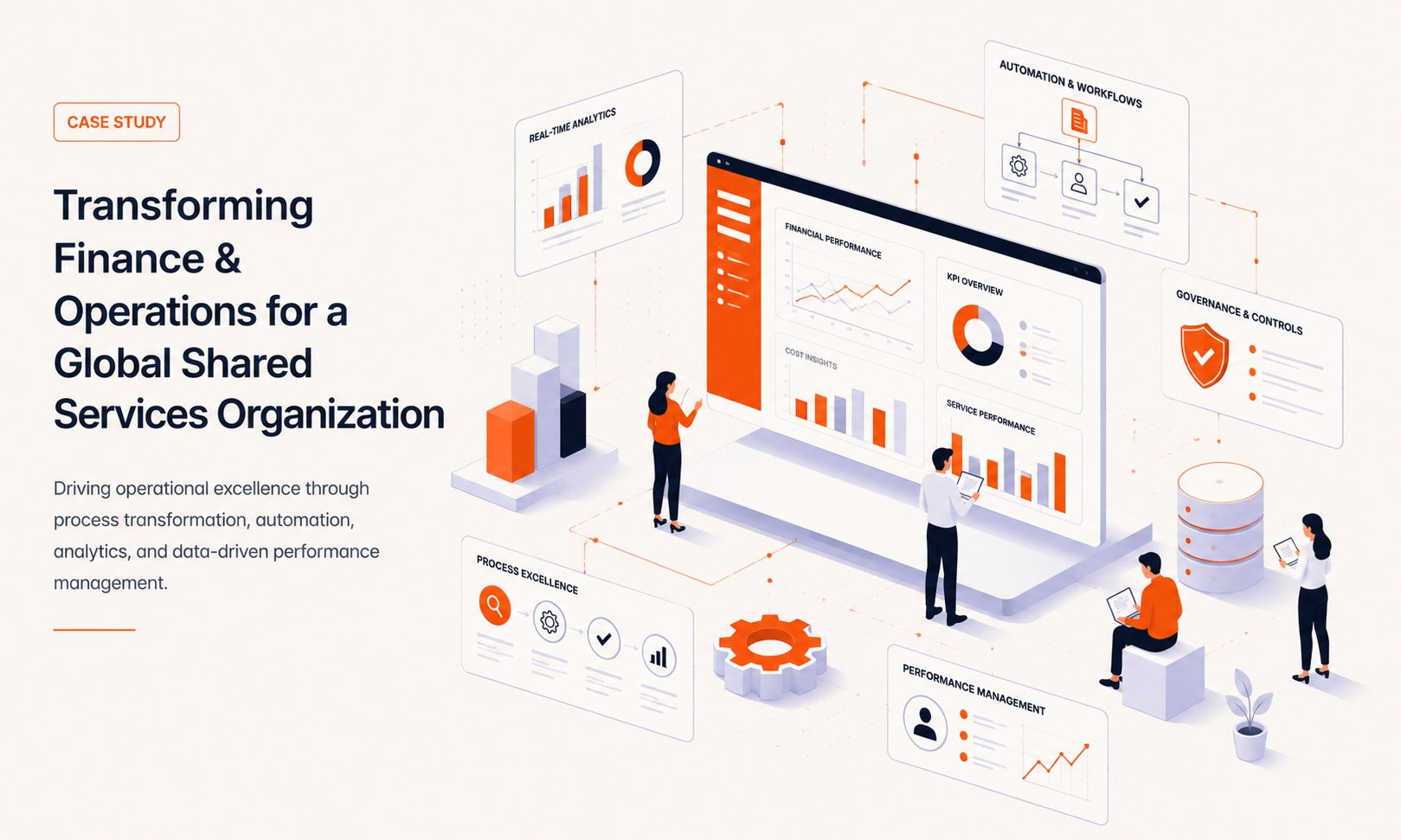
Driving operational excellence through process transformation, automation, analytics, and data-driven performance management.
This case study reflects the experience and expertise of members of The Thinkers Lab leadership team gained through large-scale transformation initiatives across public sector and enterprise environments. Specific client details have been generalized to respect confidentiality obligations.
This representative case study reflects experience gained through large-scale transformation programs, supporting a large multinational organization operating multiple finance and business operations functions through a global shared services model.
As the organization expanded, leadership sought to improve operational efficiency, strengthen governance, increase visibility into performance, and build a scalable operating model capable of supporting future growth.
The transformation initiative focused on modernizing processes, improving service delivery, enhancing decision-making capabilities, and creating a culture of continuous improvement.
BUSINESS CHALLENGES
The organization faced several complex challenges commonly found within large shared services and finance organizations:
-
Fragmented operational processes
-
Limited performance visibility
-
Manual reporting activities
-
Inefficient workflows
-
Increasing compliance requirements
-
Growing service delivery expectations
-
Productivity improvement targets
-
Difficulty measuring operational performance consistently
-
Lack of real-time decision support
TRANSFORMATION APPROACH
The program involved deploying a structured transformation framework focused on operational excellence, which included:
-
Current-state assessment
-
Process mapping and analysis
-
Stakeholder engagement
-
Performance baseline establishment
-
Governance framework design
-
Operating model review
-
Continuous improvement roadmap
-
Automation opportunity identification
-
Data and reporting strategy
SOLUTION
The transformation program successfully implemented the following initiatives:
Lean process redesign
Six Sigma methodologies
Service standardization
Workflow optimization
Intelligent workflow automation
Digital process automation
Manual effort reduction
Improved process consistency
Power BI dashboards
Operational performance reporting
Executive scorecards
KPI monitoring
Data-driven decision support
Operational governance framework
Service performance management
Compliance monitoring
Risk visibility
Structured improvement programs
Performance reviews
Operational excellence culture
Change management initiatives
LEADERSHIP & CHANGE MANAGEMENT
Transformation was not limited to technology deployment but deeply involved people, processes, governance, and culture. Successful execution required:
-
Executive sponsorship
-
Cross-functional collaboration
-
Stakeholder alignment
-
Team engagement
-
Capability development
-
Change adoption
OUTCOMES
-
Improved operational efficiency
-
Better performance visibility
-
Enhanced governance and accountability
-
Faster reporting cycles
-
Increased productivity
-
Improved stakeholder confidence
-
Better decision-making capabilities
-
Stronger service delivery performance
-
Sustainable continuous improvement culture
LESSONS LEARNED
-
Operational excellence requires both discipline and innovation.
-
Data visibility accelerates better decision-making.
-
Automation delivers the greatest value when paired with process redesign.
-
Sustainable transformation depends on governance and leadership commitment.
-
Continuous improvement must become part of organizational culture.
THE FUTURE OF OPERATIONS IS INTELLIGENT, DATA-DRIVEN, AND ADAPTIVE
Organizations are increasingly recognizing that to remain competitive, they must build adaptive and intelligent operational cores. They are heavily investing in:
-
Shared services modernization
-
Intelligent operations
-
Automation
-
Data-driven performance management
-
Digital operating models
-
Continuous improvement programs
Positioning these capabilities at the center of enterprise strategy is an essential foundation for building future-ready enterprises that can scale efficiently and respond dynamically to market demands.
EXPERIENCE NOTE
The transformation experiences described in this case study reflect expertise gained by members of The Thinkers Lab leadership team through prior engagements and large-scale transformation programs. Client identities, organizational details, and implementation specifics have been generalized for confidentiality.


From finance transformation and operational excellence to digital modernization and enterprise-wide change initiatives, successful organizations combine strategy, governance, analytics, and execution to achieve lasting results.