
Government & Public Sector
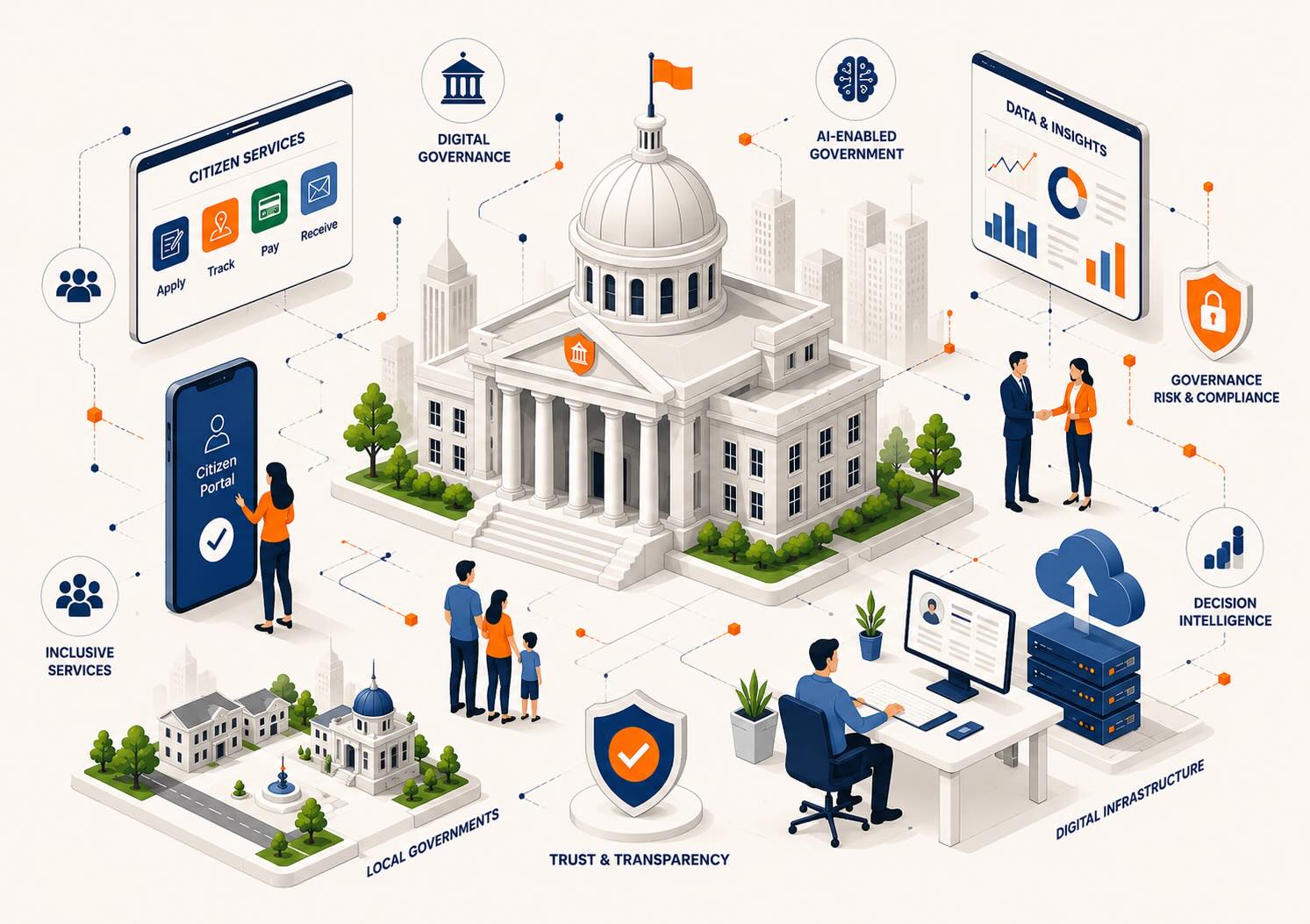
Helping public institutions modernize services, improve citizen experiences, strengthen governance, and build resilient digital ecosystems for the future.
The Public Sector Challenge
Governments and public sector organizations are facing unprecedented pressure to transform. Citizens expect seamless, digital-first services on par with the private sector. At the same time, public institutions must navigate tight budgets, legacy IT infrastructure, complex regulatory environments, and the growing mandate for data privacy and security.
The traditional approach to public sector modernization—characterized by long multi-year procurements, monolithic systems, and siloed data—is no longer sufficient. To meet the demands of the modern era, governments need agile, interoperable, and scalable digital platforms that put the citizen at the center of the service delivery model.
How We Help
TheThinkersLab acts as a strategic advisory and implementation partner to government agencies, public sector organizations, and state-owned enterprises. We bring deep expertise in enterprise architecture, digital strategy, AI readiness, and platform modernization to help the public sector execute complex transformation programs.
We do not just advise; we build. We work alongside government leaders to design digital public infrastructure, modernize legacy applications, establish robust data governance frameworks, and implement AI-enabled services that drive measurable outcomes.
Representative Focus Areas
-
Digital Government & E-Governance: Designing and implementing citizen-centric digital service platforms, national portals, and single-window systems.
-
Public Sector AI & Data Strategy: Developing national AI strategies, establishing data lakes for evidence-based policymaking, and implementing responsible AI frameworks.
-
Digital Public Infrastructure (DPI): Advising on the architecture and implementation of digital identity systems, payment gateways, and secure data exchange layers.
-
Legacy Modernization & Cloud Transformation: Migrating critical government workloads to secure cloud environments, modernizing legacy mainframes, and adopting cloud-native architectures.
-
Smart Cities & Urban Innovation: Integrating IoT, data analytics, and digital platforms to improve urban mobility, public safety, and sustainable resource management.
-
Cybersecurity & Digital Resilience: Implementing zero-trust architectures, strengthening cyber defenses, and ensuring compliance with national security and data sovereignty standards.
Representative Initiatives
-
Citizen Service Portals: Consolidating hundreds of fragmented agency websites into a single, user-centric national digital portal.
-
AI-Assisted Public Service Delivery: Deploying intelligent virtual assistants and automation to streamline citizen inquiries, permit applications, and benefits processing.
-
Data-Driven Policy Making: Building integrated data dashboards that provide government leaders with real-time insights across health, education, and economic indicators.
-
Tax & Revenue Modernization: Digitizing tax collection systems to reduce friction for citizens, improve compliance, and increase revenue realization.
-
Healthcare & Public Health Digitization: Implementing electronic health records (EHR) interoperability and digital health platforms for national health services.
Outcomes
-
Improved Citizen Experience: Reducing the time and effort required for citizens to access public services.
-
Operational Efficiency: Automating manual processes to reduce administrative burdens and lower the cost of service delivery.
-
Enhanced Transparency: Providing citizens with greater visibility into government processes and performance metrics.
-
Data-Driven Decision Making: Empowering policymakers with accurate, timely, and integrated data.
-
Increased Resilience: Building secure, scalable digital infrastructure that can adapt to future crises and technological shifts.
Why The Thinkers Lab for the Public Sector?
We understand that public sector transformation requires a different approach than the private sector. It requires navigating complex stakeholder environments, adhering to strict procurement regulations, and designing for universal accessibility. We bring a pragmatic, vendor-agnostic perspective to technology adoption, prioritizing interoperability, open standards, and long-term sustainability over proprietary lock-in.