
Building the Foundations for Digital Transformation
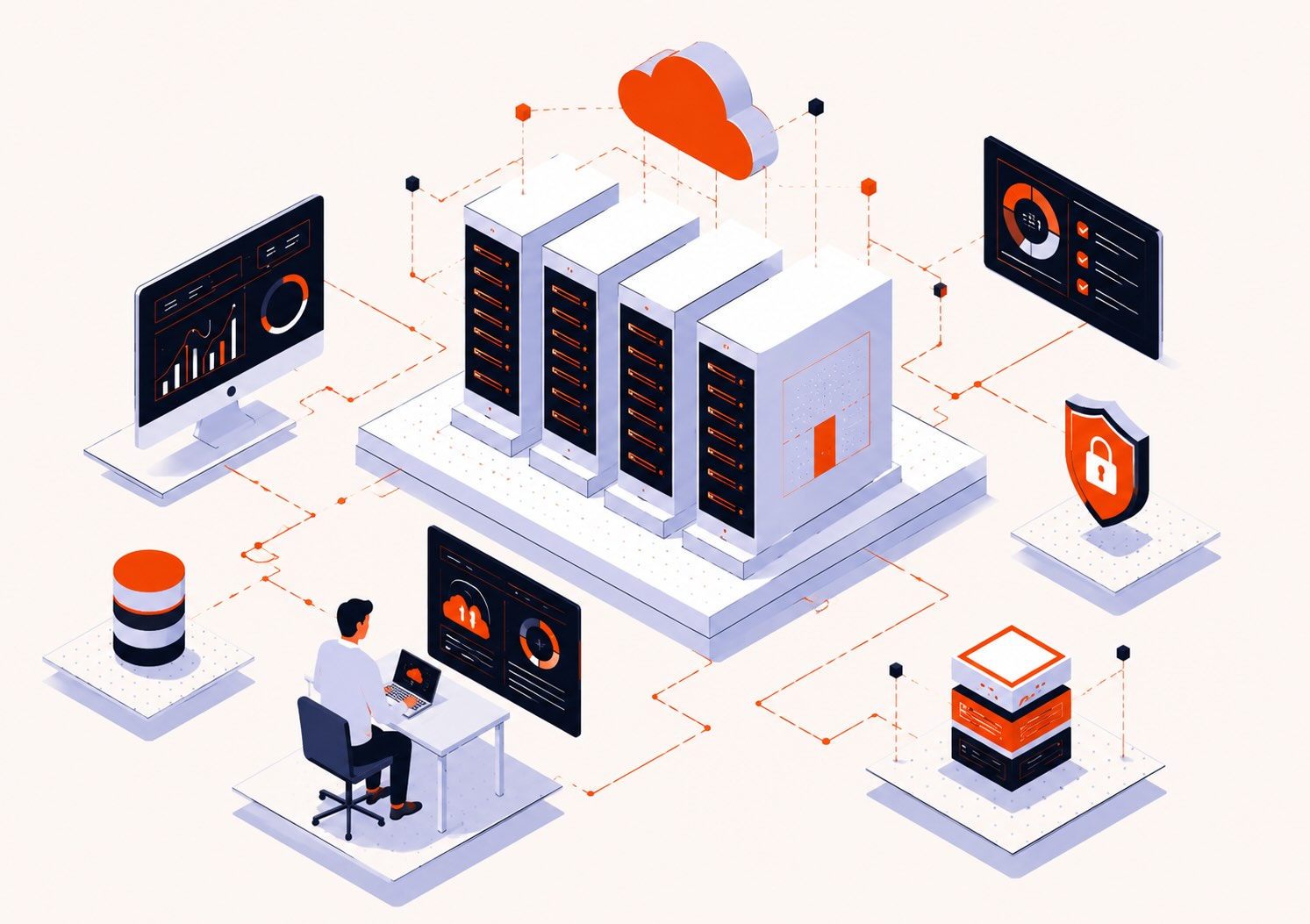
Modern organizations require resilient, scalable, and AI-ready infrastructure to support growth, innovation, and service delivery. Yet most governments and enterprises operate on fragmented technology foundations — legacy systems, disconnected platforms, and infrastructure that was never designed for the demands of digital transformation or artificial intelligence.
TheThinkersLab helps organizations take a strategic, outcome-driven approach to digital infrastructure — aligning technology investments with transformation objectives, AI readiness requirements, and long-term operational resilience. We work with leadership teams to design infrastructure strategies that enable modernization, not just maintain operations.
Our advisory is vendor-neutral and architecture-led. We combine deep expertise in cloud, hybrid infrastructure, data strategy, and enterprise platforms with a clear focus on governance, security, and sustainable scalability.
Why Digital Infrastructure Matters
Infrastructure is the foundation on which every digital initiative depends. Without the right foundations, transformation programs stall, AI initiatives fail to scale, and organizations remain locked into legacy constraints that limit agility and innovation.
The forces reshaping infrastructure strategy
-
Digital transformation dependency — Every digital service, platform, and application depends on underlying infrastructure. Modernization programs cannot succeed on outdated foundations.
-
AI readiness requirements — AI workloads demand compute capacity, data pipeline infrastructure, and low-latency processing capabilities that traditional environments were not designed to deliver.
-
Accelerating data growth — Organizations are generating data at unprecedented rates. Infrastructure must scale to support storage, processing, analytics, and governance across structured and unstructured data.
-
Operational resilience — Service continuity, disaster recovery, and business resilience depend on robust, redundant, and well-governed infrastructure that can withstand disruptions.
-
Security and governance — As threat landscapes evolve and regulatory requirements increase, infrastructure must embed security, compliance, and data protection by design.
Infrastructure is not a back-office concern. It is a strategic enabler that determines an organization's capacity to transform, innovate, and serve at scale.
Our Approach to Digital Infrastructure
We follow a structured, outcome-driven methodology that takes organizations from infrastructure assessment to scaled, resilient operations. Our six-phase approach ensures that infrastructure investments are aligned with business priorities and transformation objectives.
We evaluate the current infrastructure landscape — mapping existing systems, dependencies, capacity constraints, and technical debt. We assess readiness for digital transformation, AI adoption, and future workload demands.
We co-create the target-state architecture with leadership teams — defining the optimal mix of cloud, on-premise, hybrid, and edge infrastructure aligned with business strategy, regulatory requirements, and operational objectives.
We plan and execute infrastructure modernization — migrating workloads, consolidating systems, retiring legacy platforms, and implementing modern infrastructure patterns that improve performance, flexibility, and cost efficiency.
We continuously optimize infrastructure for performance, cost, and sustainability — implementing monitoring, capacity management, and resource optimization practices that maximize return on infrastructure investment.
We embed governance, security, and compliance across the infrastructure layer — establishing policies, controls, and frameworks that ensure data protection, regulatory adherence, and operational accountability.
We design infrastructure for elasticity and growth — building foundations that can scale with demand, expand across geographies, and support new workloads including AI, analytics, and digital services without re-architecture.
Our Digital Infrastructure Capabilities
We assess and prepare organizations for AI adoption — evaluating compute requirements, data infrastructure maturity, integration readiness, and governance frameworks needed to support responsible AI deployment at scale. Our AI readiness advisory ensures that infrastructure investments are aligned with AI ambitions.
We help organizations define a comprehensive infrastructure vision — aligning technology investments with transformation priorities, operational requirements, and long-term scalability needs. Our strategies address the full infrastructure landscape including compute, storage, networking, integration, and data management.
We design and execute cloud migration and hybrid infrastructure strategies — helping organizations determine the right mix of public cloud, private cloud, and on-premise infrastructure. Our approach prioritizes workload optimization, cost management, security, and regulatory compliance.
We provide strategic advisory on data centre planning, consolidation, and optimization — helping organizations rationalize their physical infrastructure footprint, evaluate colocation options, and design data centre strategies that support modernization objectives. We are not a data centre operator; we provide independent, vendor-neutral advisory.
We help organizations modernize core enterprise platforms — including ERP, CRM, integration middleware, and legacy applications. Our approach focuses on reducing technical debt, improving interoperability, and creating platform foundations that support digital services and AI-enabled workflows.
We design and implement infrastructure governance frameworks — establishing policies, standards, and controls for infrastructure provisioning, change management, access control, and compliance. Our frameworks ensure that infrastructure operations are transparent, auditable, and aligned with institutional mandates.
We help organizations design and validate business continuity and disaster recovery strategies — assessing single points of failure, defining recovery objectives, and implementing resilient architectures that protect critical services and data against disruptions.
We assess and mitigate infrastructure-related risks — including cybersecurity vulnerabilities, regulatory non-compliance, vendor concentration, and capacity constraints. Our risk frameworks integrate with broader enterprise risk management and governance structures.
Example Transformation Initiatives
The following are illustrative examples of the types of digital infrastructure initiatives we design and deliver. These represent our capability areas and implementation approach — they are not references to completed projects.
A comprehensive evaluation of an organization's infrastructure readiness for AI adoption — assessing compute capacity, data pipeline maturity, integration architecture, governance frameworks, and skills readiness to define a prioritized AI infrastructure roadmap.
A multi-year infrastructure modernization plan that prioritizes workload migration, platform consolidation, and technology refresh based on business impact, risk, and investment efficiency — providing a clear execution path from current state to target architecture.
A structured approach to cloud adoption — evaluating workload suitability, defining migration waves, selecting cloud deployment models, and establishing governance and cost management frameworks for sustained cloud operations.
An enterprise-wide infrastructure architecture blueprint that defines the target technology landscape — covering compute, storage, networking, security, integration, and data management — aligned with transformation objectives and operational requirements.
A rationalization strategy for organizations with distributed or aging data centre estates — evaluating consolidation options, colocation alternatives, and hybrid models to reduce cost, improve resilience, and simplify operations.
A comprehensive disaster recovery and business continuity framework — defining recovery point and time objectives, designing failover architectures, and establishing testing and validation protocols to ensure service continuity.
A forward-looking capacity planning initiative that models future infrastructure demand based on growth projections, digital service adoption, AI workload requirements, and data growth — ensuring infrastructure investments stay ahead of operational needs.
Outcomes We Help Organizations Achieve
Every infrastructure engagement is designed to produce measurable improvements in how organizations operate, transform, and prepare for the future.
-
Improved scalability — Infrastructure that grows with demand, supporting new workloads, services, and geographies without re-architecture.
-
Greater resilience — Robust, redundant architectures that protect critical services and data against disruptions and outages.
-
Reduced infrastructure risk — Lower exposure to cybersecurity threats, vendor concentration, regulatory non-compliance, and capacity constraints.
-
Faster digital transformation — Modern foundations that accelerate the delivery of digital services, platform initiatives, and enterprise modernization programs.
-
Enhanced AI readiness — Infrastructure foundations designed to support AI workloads, data pipelines, and intelligent services at production scale.
-
Improved operational efficiency — Optimized infrastructure operations that reduce cost, complexity, and manual effort while improving performance and reliability.
Why TheThinkersLab
We bring a distinctive combination of strategic thinking, implementation expertise, and cross-domain understanding that sets our infrastructure advisory apart.
We don't stop at architecture diagrams. Our integrated model connects infrastructure strategy to implementation and operations — ensuring that modernization programs deliver operational results, not just technical blueprints.
We understand that infrastructure is a means to an end — enabling digital transformation, AI adoption, and service modernization. Our advisory is always connected to the broader business and transformation context.
We bring deep AI and data expertise to infrastructure planning — ensuring that technology investments are designed to support current and future AI workloads, data requirements, and intelligent service delivery.
We embed governance, security, and compliance into every infrastructure recommendation — ensuring that modernization programs operate within regulatory requirements and institutional mandates from day one.
We understand the infrastructure challenges unique to both enterprise and government environments — including legacy constraints, procurement complexity, regulatory obligations, and the need for sovereign and secure infrastructure solutions.